
Greek Yoghurt and Berry Parfait
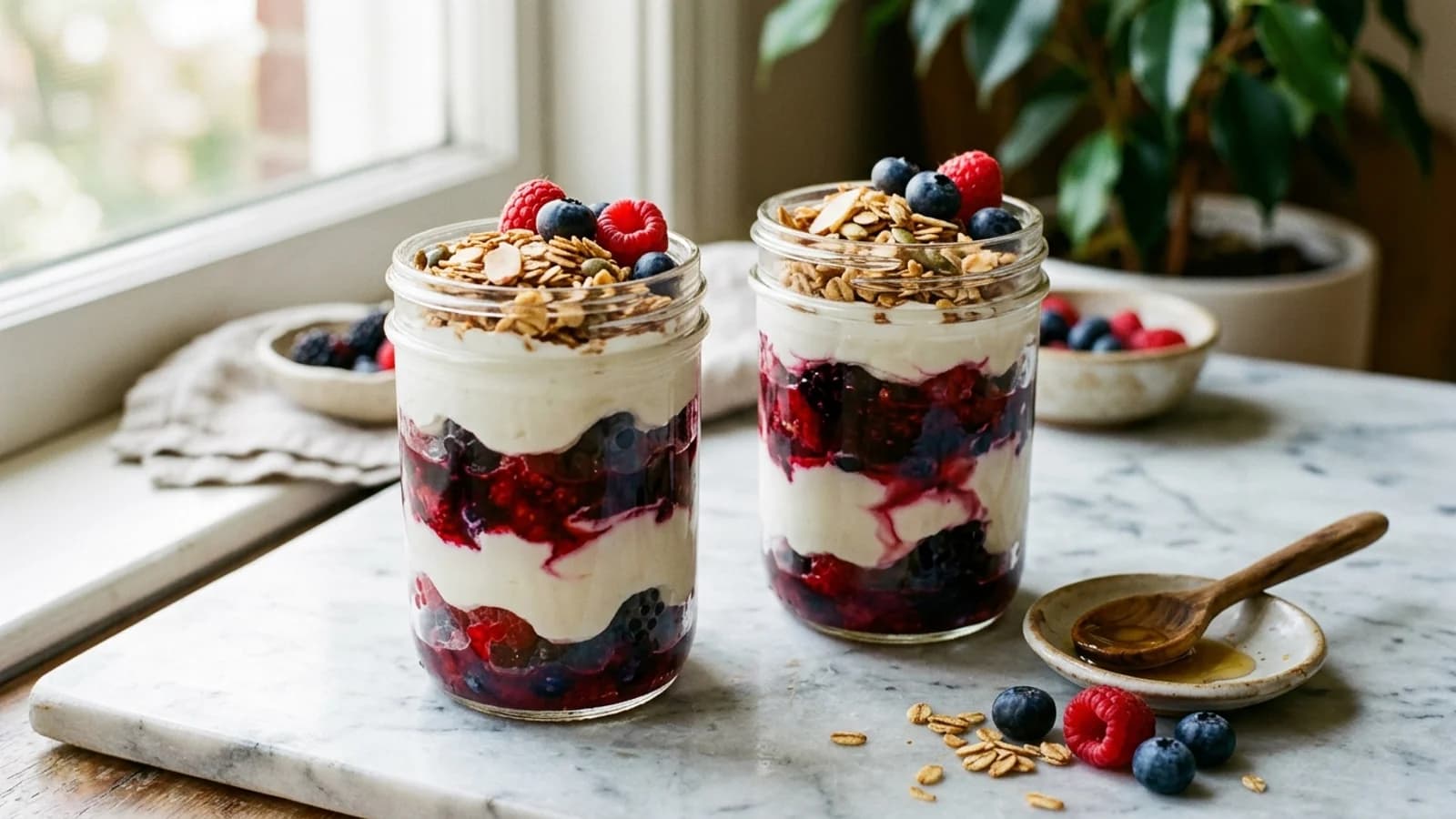
Layered yoghurt, macerated berries and toasted oats. Five minutes, no cooking, and it holds overnight for a packed breakfast.
Nutrition Info (per serving)
- 380
- Calories
- 20g
- Protein
- 14g
- Fat
- 42g
- Carbs
Ingredients
- 400 g full-fat Greek yoghurt
- 250 g mixed berries
- 60 g rolled oats
- 20 g flaked almonds
- 2 tbsp honey
- 1 tsp vanilla extract
- 1 lemon
- A pinch of salt
Instructions
- 1Toast the oats and flaked almonds together in a dry frying pan over medium heat for 4 to 5 minutes, shaking the pan, until golden and nutty. Tip them onto a plate to cool — left in the hot pan they carry on browning and turn bitter.
- 2Halve any larger berries. Put them in a bowl with 1 tbsp of the honey, the zest of the lemon and a squeeze of its juice, and stir gently.
- 3Leave the berries for 10 minutes. The sugar draws juice out of them by osmosis, and that syrup is what gives the parfait its colour and stops the yoghurt tasting plain.
- 4Stir the remaining honey, the vanilla and the pinch of salt into the yoghurt. The salt is the difference between yoghurt that tastes sour and yoghurt that tastes creamy.
- 5Spoon a layer of yoghurt into two glasses or jars, then a layer of berries with some of their syrup, then more yoghurt.
- 6Add the toasted oats and almonds at the very last moment. Layered in early they go soft within the hour and the whole point of them is gone.
A parfait is three components and no cooking, which means the only things that can go wrong are texture and seasoning. Both are easy to fix.
Macerate the berries
Tossing berries with honey and lemon and leaving them for ten minutes changes them considerably. Sugar draws water out of the fruit, and what comes back is a thin, intensely fruity syrup that bleeds through the yoghurt.
Ten minutes is enough for soft berries. Firmer fruit — strawberries, blackberries — benefits from twenty.
Frozen berries work particularly well here, because ice crystals have already ruptured the cell walls. Let them thaw in the honey and they release even more juice.
Salt the yoghurt
Greek yoghurt is quite sour on its own, and the usual response is to add more honey, which makes it sweet and sour rather than creamy.
A pinch of salt does something different: it suppresses the perception of sourness, so the dairy comes forward. It is the same trick used in cheesecake and in salted caramel, and in a dish this simple it is very noticeable.
Toast the oats separately, add them last
Raw rolled oats in yoghurt go slimy. Toasted, they stay crisp and taste nutty rather than floury, and four minutes in a dry pan is all it takes.
But they only stay crisp while they are dry. Layer them into the glass in advance and moisture from the yoghurt softens them within an hour. If you are making this the night before, keep the oats in a separate container and add them in the morning.
Full-fat yoghurt
Fat carries flavour and gives body. Zero-fat Greek yoghurt is thinner, sharper and considerably less satisfying, and people compensate with more honey — which usually leaves the total calories in a similar place with less protein and no creaminess.
Nutrition
Around 380 calories with 20 grams of protein, most of it from the yoghurt. Greek yoghurt is strained, which concentrates protein and calcium and removes some of the lactose, so it is often easier to tolerate than regular yoghurt.
Berries are among the better fruits for fibre relative to sugar, and they carry a lot of vitamin C and anthocyanins.
It keeps overnight in the fridge as long as the oats stay out.
Comments
Sign in to leave a comment
No comments yet — be the first