
Butternut Squash Soup
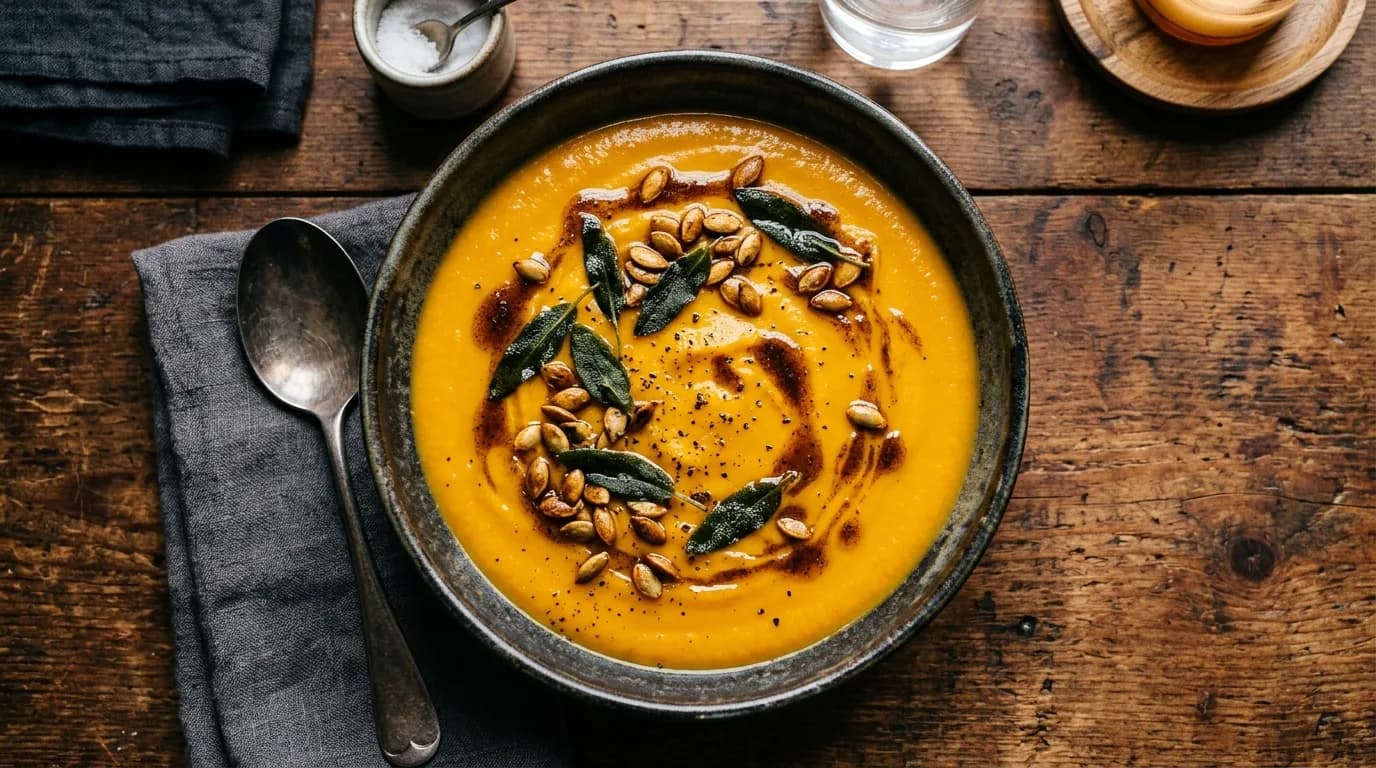
Squash and apple roasted together until caramelised, blended smooth and finished with brown butter and sage.
Nutrition Info (per serving)
- 380
- Calories
- 6g
- Protein
- 24g
- Fat
- 40g
- Carbs
Ingredients
- 1 large butternut squash (about 1.2 kg)
- 1 apple
- 1 onion
- 4 cloves garlic
- 3 tbsp olive oil
- 1 tsp ground cumin
- 1/4 tsp grated nutmeg
- 800 ml vegetable stock
- 50 g butter
- Small bunch sage
- 2 tbsp pumpkin seeds
- 1 lemon
- Salt and black pepper
Instructions
- 1Heat the oven to 200C fan. Peel the squash, deseed it and cut it into 3 cm cubes. Core the apple and cut it into wedges. Cut the onion into wedges.
- 2Toss the squash, apple and onion with the olive oil, cumin, 1 tsp salt and plenty of pepper, and spread on a large tray in a single layer with the unpeeled garlic cloves tucked among them.
- 3Roast for 35 to 40 minutes, turning once, until the squash is soft and caramelised at the edges. Boiled squash gives a pale, sweet, slightly flat soup; roasted, the sugars caramelise and the flavour is far deeper.
- 4Squeeze the garlic out of its skins.
- 5Tip everything into a blender with the stock and the nutmeg and blend until completely smooth. Fill the jug no more than half full with hot liquid, remove the lid's centre cap and cover it with a tea towel — hot soup builds pressure and will spray.
- 6Pour into a pan and warm through, loosening with more stock if it is thicker than you want.
- 7Make the brown butter: melt the butter in a small frying pan over medium heat and keep cooking for 4 to 5 minutes, until the milk solids at the base turn deep golden and it smells nutty.
- 8Add the sage leaves and fry for 30 seconds until crisp, then take the pan off the heat immediately. Brown butter turns from nutty to burnt in seconds.
- 9Toast the pumpkin seeds in a dry pan for 3 minutes.
- 10Season the soup and add a squeeze of lemon — squash is sweet and needs acid to keep it from tasting cloying.
- 11Ladle into bowls and spoon over the brown butter and crisp sage, then scatter with pumpkin seeds.
Squash soup is easy to make and easy to make boring. Three additions keep it from being a bowl of sweet orange purée.
Roast, and add an apple
Roasting caramelises the squash's sugars instead of simply softening them. The difference between roasted and boiled squash soup is not subtle.
The apple is the less obvious addition. It brings acidity and a fruity sharpness that cuts the squash's sweetness, and it disappears entirely into the blend — nobody tastes apple, they taste a soup that is better balanced.
A tart eating apple works better than a sweet one.
Brown butter and sage
Butter cooked until its milk solids toast smells of hazelnuts and toffee, and spooned over a sweet vegetable soup it provides exactly the savoury, slightly bitter counterweight the bowl needs.
Sage fried crisp in that butter for thirty seconds adds a resinous, faintly medicinal note that is the traditional pairing with squash across northern Italy.
Watch it. Brown butter goes from perfect to acrid in about fifteen seconds, and the pan keeps cooking after you take it off the heat.
Acid at the end
A squeeze of lemon in a squash soup is the single most common omission. Without it the soup reads as flat and cloying no matter how well seasoned.
Add it off the heat and taste. You should not detect lemon; you should notice the soup tasting less heavy.
Blend hot liquid safely
Steam expands in a sealed blender jug and will push the lid off, spraying scalding soup. Half fill it, take the centre cap out of the lid, and hold a folded tea towel over the hole.
A stick blender avoids the risk and gives a slightly coarser texture.
Nutrition
Around 380 calories a serving. Butternut squash is one of the densest sources of beta-carotene available — a single serving covers several times the daily vitamin A requirement.
Beta-carotene is fat-soluble, so the olive oil and butter here materially improve how much of it you absorb. A fat-free version is less nutritious as well as less good.
The soup keeps for four days and freezes for three months. Make the brown butter fresh each time; it takes five minutes and does not keep well.
Comments
Sign in to leave a comment
No comments yet — be the first